
If you have ever scanned the menu of a Cantonese restaurant and felt a flicker of confusion at the sheer variety of noodle dishes, you are not alone. Among the Lo Mein and Chow Fun, you will often spot a dish listed simply as Mei Fun. It is one of the most approachable, adaptable, and beloved staples of Chinese takeout and home cooking alike. But what exactly is it, and why does it deserve a spot in your weekly dinner rotation? This guide will break down everything you need to know about these delicate rice threads, from their gluten-free nature to the famous curry-spiced variation that bears a country’s name despite hailing from Hong Kong.
What Is Mei Fun?
To understand the dish, you first need to understand the noodle. In Cantonese, the word “fun” refers broadly to rice noodles, while “mei” translates to “rice” . Therefore, what is mei fun? At its most basic, it is a very thin, dried noodle made from ground rice and water. Because they are incredibly slender—often compared to angel hair pasta or vermicelli—they are frequently labeled in Asian grocery stores as rice vermicelli or rice sticks .
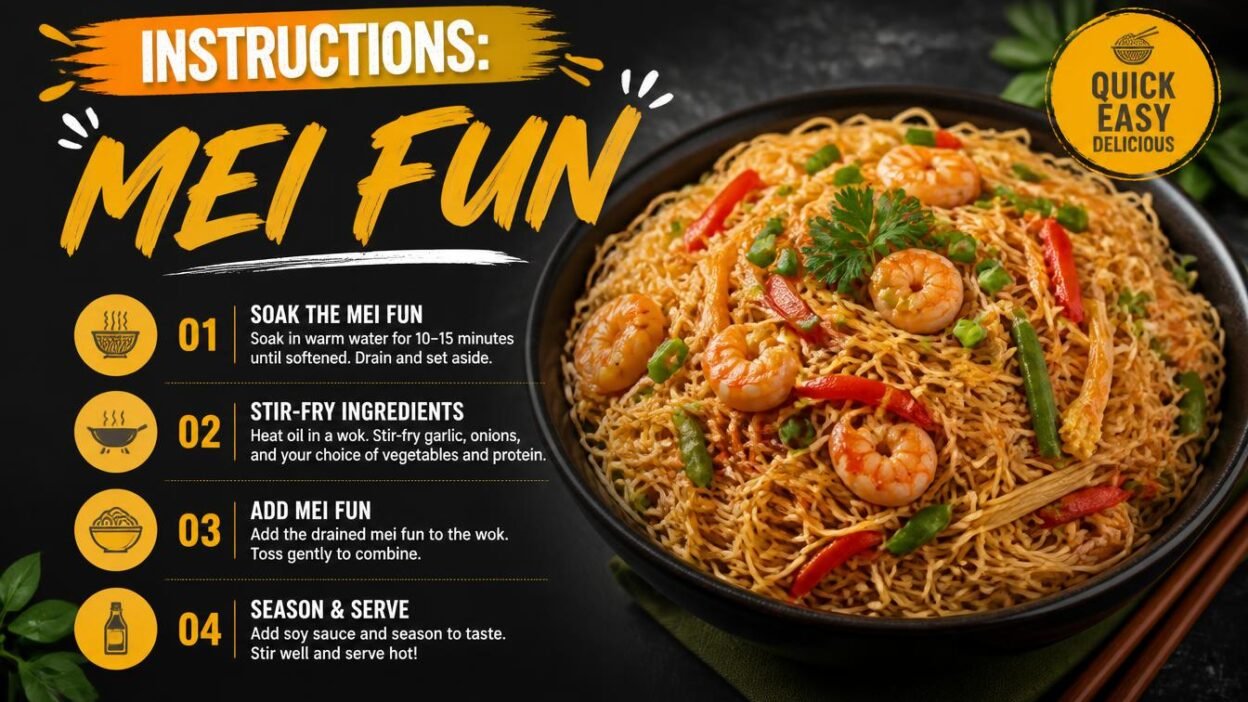
Unlike wheat-based pasta, these noodles have a distinct, slightly chewy texture and a neutral flavor that acts as a blank canvas for sauces and seasonings. When you see “Mei Fun” listed as an entrée on a menu, it almost always refers to Chow Mei Fun, which is the stir-fried version of the dish . The dry noodles are briefly rehydrated—usually by soaking them in hot water rather than boiling them vigorously—before being tossed into a searing hot wok with oil, vegetables, and proteins. The result is a light, savory tangle of noodles that feels significantly less heavy than a plate of Lo Mein.
What Is Chow Mei Fun?
While the terms are often used interchangeably in restaurants, what is chow mei fun specifically? The word “chow” indicates that the ingredients have been stir-fried. This is the quintessential cooking method for these delicate threads.
A classic Chow Mei Fun relies on high heat to achieve wok hei—the elusive “breath of the wok” that gives stir-fries their smoky, charred complexity . Because the rice noodles are so thin, they cook in mere minutes. The dish typically includes a colorful array of julienned vegetables like carrots, cabbage, and bell peppers, along with scrambled eggs and a choice of protein such as chicken, shrimp, or pork . The sauce is usually a simple blend of light soy sauce, oyster sauce, and perhaps a splash of Shaoxing wine, designed to enhance rather than drown the delicate noodles. A crucial tip for home cooks is to ensure the noodles are well-drained after soaking; excess water will steam the noodles rather than fry them, leading to a mushy texture instead of the desired springy bite .
What Is Mei Fun Chinese Food?
When exploring what is mei fun chinese food in a broader cultural context, it is helpful to understand its place in the regional cuisines of China. While rice noodles are consumed across southern China and Southeast Asia, the specific iteration known as Mei Fun is deeply tied to Cantonese cooking .
In traditional Cantonese home cooking, Mei Fun is a highly practical staple. It is inexpensive, stores indefinitely in the pantry, and serves as a vehicle for whatever leftovers are available. This practicality has made it a cornerstone of Chinese-American restaurant menus as well. However, there is a distinct difference between the Mei Fun found in a classic Cantonese kitchen and the heavy, sauce-laden versions sometimes found in Western takeout. The authentic approach emphasizes the texture of the noodle and the freshness of the vegetables, often using dried shiitake mushrooms to add deep umami flavor without relying on heavy gravies . Understanding this distinction helps you appreciate the dish not just as takeout, but as a legitimate culinary tradition.
What Is Singapore Mei Fun?
Perhaps the most famous—and most confusingly named—variation of this dish is Singapore Mei Fun. Despite the name, this dish did not originate in Singapore; in fact, many Singaporeans have never even heard of it . Culinary historians trace its roots to Hong Kong during the British colonial era, where curry powder was a readily available ingredient in the local larder .
What is Singapore Mei Fun then? It is a vibrant, bright yellow stir-fry characterized by the warm, aromatic heat of Madras-style curry powder. The curry powder is what gives the dish its signature color and flavor profile. A typical Singapore Mei Fun includes a mix of proteins—often shrimp, char siu (Chinese BBQ pork), and chicken—along with thin strips of onion and bell pepper . The curry powder is usually bloomed in the hot oil before the noodles are added, which releases its essential oils and ensures an even coating. If you enjoy a bit of spice and the complex fragrance of curry, this is the variation to try first.
Is Mei Fun Gluten Free?
For individuals with celiac disease or gluten sensitivity, navigating Chinese cuisine can be tricky due to the prevalence of wheat-based soy sauces and noodles. However, the answer to is mei fun gluten free is generally yes—with important caveats.
Because authentic mei fun noodles are made from only rice and water, they are naturally gluten-free . Unlike wheat noodles, they contain no gluten proteins. However, there are two major risk factors to consider. First, some manufacturers blend in other starches like tapioca or even wheat flour to alter the texture, so you must check the ingredient label on the package . Second, the sauces used in cooking are the primary source of hidden gluten. Standard soy sauce contains wheat, and oyster sauce often contains wheat flour as a thickener. To ensure a gluten-free meal, you must use tamari (gluten-free soy sauce) and a certified gluten-free oyster sauce, or simply season with salt and gluten-free fish sauce . When dining out, it is always best to ask the restaurant to confirm their ingredients.
Vegetable Mei Fun: A Perfect Meatless Meal
One of the greatest strengths of this dish is its adaptability. Vegetable mei fun is a perfect example of how this noodle can shine without a single piece of meat. Because the noodles are neutral, they absorb the flavors of whatever vegetables you pair them with.
A standout vegetable mei fun relies on ingredients that provide contrasting textures and deep savory notes. Napa cabbage is a favorite because it wilts down into silky ribbons that cling to the noodles . Dried shiitake mushrooms, rehydrated in warm water, offer a meaty, umami-rich bite that satisfies the palate . For brightness and crunch, julienned carrots, snow peas, and bean sprouts are excellent choices. The key to a great vegetable version is to stir-fry the harder vegetables first, then add the softer ones and the noodles at the end, ensuring nothing turns to mush. A drizzle of sesame oil and a sprinkle of white pepper at the finish elevate the dish without overwhelming it.
Tips for Cooking the Perfect Noodles at Home
Mastering mei fun at home is less about complex techniques and more about understanding the temperament of the rice noodle. Here are a few practical tips to ensure success:
- Soak, Don’t Boil: While some packages instruct boiling, soaking the noodles in hot (but not boiling) water for about 20 to 30 minutes gives you the most control. You want them pliable but still slightly firm in the center, as they will continue to cook in the wok .
- Drain Thoroughly: Wet noodles will steam and clump. After soaking, drain them well and toss them with a tiny bit of oil if they are sitting for a while before cooking .
- Use a Hot Pan: A carbon steel wok or a large, heavy skillet is ideal. The high heat prevents sticking and helps evaporate any residual moisture quickly .
- Work in Batches: If you are cooking a large quantity, do not overcrowd the pan. Cook the protein and vegetables first, remove them, then fry the noodles in the hot pan before combining everything at the end.
Conclusion
Mei fun is a testament to the beauty of simplicity in Chinese cuisine. Whether you are enjoying a classic Chow Mei Fun with shrimp and vegetables, indulging in the curry-kissed heat of Singapore Mei Fun, or crafting a colorful Vegetable Mei Fun from your fridge’s odds and ends, these delicate rice threads offer a light yet satisfying meal. They are naturally gluten-free, incredibly quick to cook, and endlessly versatile. The next time you are planning a weeknight dinner and want something that feels lighter than traditional pasta but just as comforting, reach for a packet of rice vermicelli and fire up the wok.

About Ryan Mitchell
Ryan Mitchell is a humor writer and the creator behind Puns and Joke, where he shares clever puns, funny jokes, witty one-liners, and everyday humor.
With a passion for wordplay and a love of making people laugh, Ryan believes that sometimes the simplest joke can turn an ordinary day into a better one. His writing focuses on lighthearted, relatable, and easy-to-share humor that readers can enjoy with friends and family.
When he’s not coming up with the next pun or joke, Ryan enjoys exploring new ideas, finding humor in everyday situations, and discovering the little moments that can make people smile.
Through Puns and Joke, Ryan hopes to bring a little more laughter to the internet—one joke at a time.
Puns happen. Jokes follow. Smiles are guaranteed.